
पिछले महीने मैं एक सरकारी अस्पताल में गया था। वहां के डॉक्टर से बात हो रही थी ambulance की problems के बारे में।
उन्होंने बताया कि diesel ambulances में maintenance बहुत आता है। Fuel cost भी बहुत ज्यादा है। Emergency services पर burden पड़ता है।
तभी मुझे PM E-DRIVE scheme के बारे में पता चला। यह नई योजना है जो electric ambulances को promote कर रही है।
Government subsidy दे रही है। Hospitals और private operators को encourage कर रही है electric vehicles अपनाने के लिए।
मैंने पूरी scheme की details निकाली। Ministry of Heavy Industries के documents पढ़े। Ground reality भी देखी।
आज मैं आपको complete information दूंगा। कौन apply कर सकता है। कितनी subsidy मिलती है। Process क्या है।
PM E-DRIVE Scheme की Background
PM Electric Drive Revolution in Innovative Vehicles Enterprise – यह full form है PM E-DRIVE का।
October 2024 में यह scheme launch हुई। FAME-II scheme की जगह आई है। Budget ₹10,900 crore रखा गया है।
इसका focus electric vehicles की demand side पर है। Buyers को incentivize करना main goal है।
Different categories cover की गई हैं – two-wheelers, three-wheelers, ambulances, trucks, और buses।
Charging infrastructure पर भी ₹2,000 crore allocate किए गए हैं। Complete ecosystem develop करने का plan है।
Ministry of Health के साथ coordination में e-ambulance segment को special focus दिया गया है।
Healthcare services को affordable और sustainable बनाना objective है। Rural areas तक better emergency services पहुंचाना है।
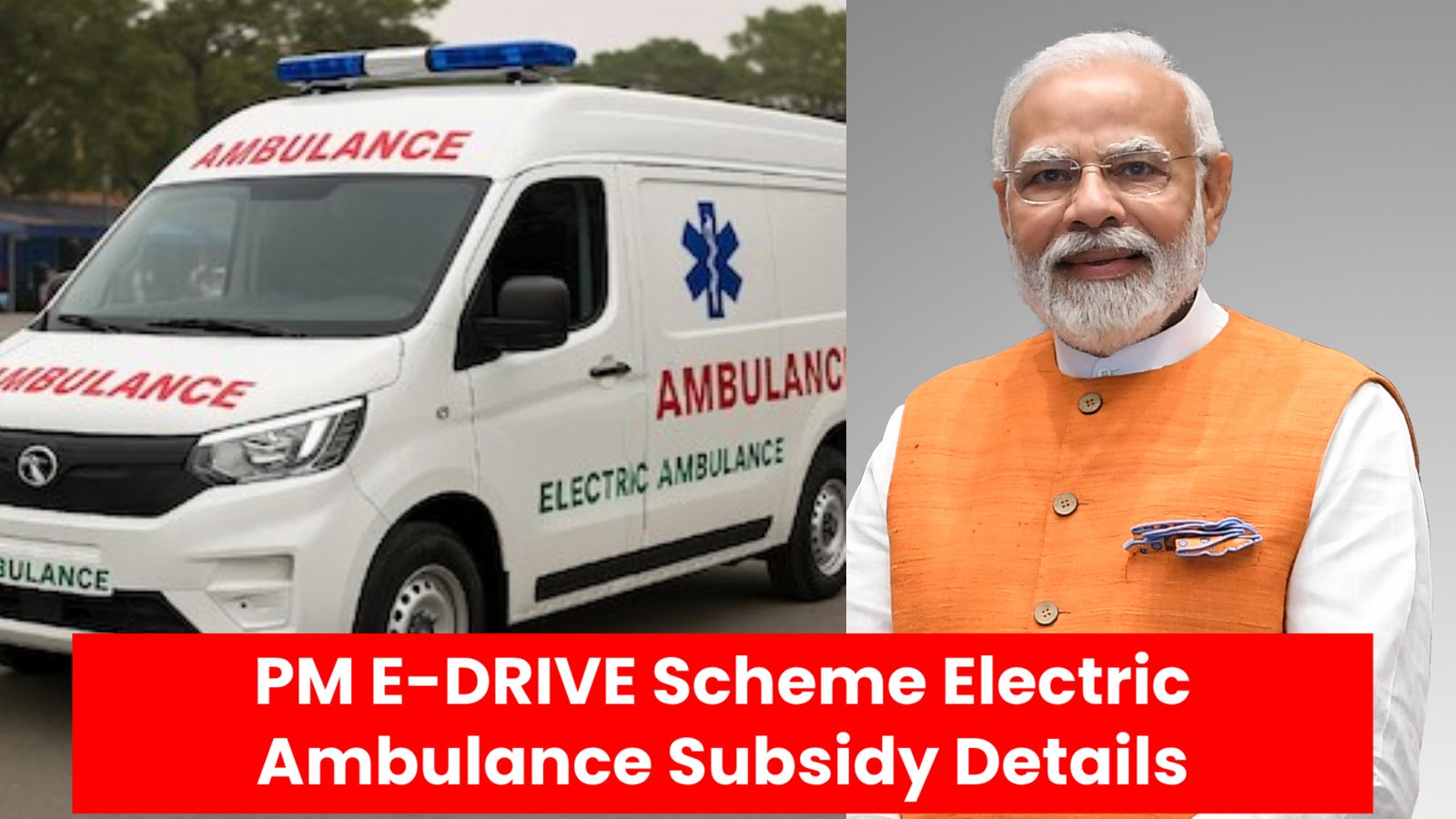
Electric Ambulance की जरूरत क्यों
Traditional diesel ambulances में कई problems हैं जो मैंने देखी हैं।
Fuel cost बहुत ज्यादा है। Average ambulance महीने में 2000-3000 km चलती है। ₹15,000-20,000 का diesel खर्च आता है।
Maintenance भी expensive है। Engine servicing, oil changes, exhaust repairs – सब मिलाकर ₹30,000-40,000 yearly।
Noise pollution भी issue है। Siren के साथ loud engine sound patients के लिए stressful होता है।
Air pollution contribution करती हैं। Cities में emission norms strict हो रहे हैं। Diesel vehicles पर restrictions आ रहे हैं।
Electric ambulances इन सभी problems का solution हैं। Running cost 70-80% कम हो जाती है।
Silent operation है जो patients की comfort बढ़ाता है। Emergency medical equipment भी better operate होता है stable power supply से।
Zero tailpipe emissions हैं। Environment friendly हैं। Urban areas के लिए ideal हैं।
Subsidy Amount और Structure
यहां main attraction है। Government कितनी financial support दे रही है?
Electric ambulances के लिए ₹5 lakh per vehicle की subsidy announced की गई है। यह significant amount है।
यह demand incentive है। यानी vehicle purchase करने पर directly benefit मिलेगा।
Subsidy battery capacity के basis पर नहीं है इस category में। Fixed amount है per ambulance।
Calculation Example: Average electric ambulance की cost: ₹18-20 lakh Government subsidy: ₹5 lakh Effective cost: ₹13-15 lakh
यह 25-30% की saving है upfront cost में। बहुत attractive proposition है।
State governments अपनी additional subsidies भी दे सकती हैं। कुछ states ने road tax exemption भी दिया है।
GST benefit भी है। Electric vehicles पर सिर्फ 5% GST है। Diesel ambulances पर 28% लगता है।
इन सब को मिला दो तो total savings 35-40% तक जा सकती है।
Eligibility Criteria कौन Apply करे
सभी ambulance operators eligible नहीं हैं। Specific criteria हैं।
Eligible Entities:
Government Hospitals: सभी सरकारी अस्पताल directly eligible हैं। District hospitals, CHCs, PHCs – सब apply कर सकते हैं।
State Health Departments के through application process होगा। Centralized procurement भी possible है।
Private Hospitals: Registered private hospitals भी eligible हैं। लेकिन कुछ conditions हैं।
Hospital को minimum bed capacity maintain करनी होगी। Emergency services operational होनी चाहिए।
Ambulance Service Providers: Private ambulance operators जो registered हैं वो apply कर सकते हैं।
License और permits valid होने चाहिए। Track record clean होना चाहिए।
NGOs और Trusts: Healthcare services provide करने वाले NGOs eligible हैं।
80G या 12A registration होना चाहिए। Last 3 years का audit report चाहिए।
Ineligible Categories: Individual buyers नहीं ले सकते। Personal use के लिए यह scheme नहीं है।
Unregistered operators भी eligible नहीं हैं। Proper documentation mandatory है।
Vehicle Specifications Requirements
Subsidy पाने के लिए ambulance को specific standards meet करने होंगे।
Technical Specifications:
Battery Capacity: Minimum battery pack size defined है। कम से कम 40 kWh होनी चाहिए।
Range minimum 200 km की होनी चाहिए single charge पर। Real-world conditions में।
Payload Capacity: Minimum 500 kg का payload carry करना चाहिए। Medical equipment और staff के साथ।
Suspension strong होना चाहिए। Indian road conditions के लिए suitable।
Medical Equipment Compatibility: Adequate electrical points होने चाहिए। Medical devices को power देने के लिए।
Inverter capacity sufficient होनी चाहिए। Life-support equipment चला सके।
Safety Standards: AIS (Automotive Industry Standards) compliant होना mandatory है।
Fire safety नorms follow करने होंगे। Battery safety certification चाहिए।
Ambulance Type: Basic Life Support (BLS) और Advanced Life Support (ALS) दोनों categories eligible हैं।
Patient Transport Vehicles (PTV) भी cover हैं अगर medical equipment fitted है।
Application Process Step-by-Step
अब practical part – कैसे apply करें?
Step 1: Portal Registration PM E-DRIVE की official website पर जाएं – pmedrive.heavyindustries.gov.in
“Register” option पर click करें। Organization details भरें। Email verification होगा।
Login credentials आपको email पर मिलेंगे। Password strong रखें।
Step 2: Document Upload Hospital/organization का registration certificate upload करें।
Medical council registration (if applicable) लगाएं। GST certificate attach करें।
PAN card mandatory है। Bank account details भी देनी होंगी।
Authorized signatory का ID proof और authorization letter चाहिए।
Step 3: Vehicle Selection Approved manufacturers की list portal पर available है। उनमें से select करें।
Vehicle का model, variant, specifications – सब details भरें।
Proforma invoice dealer से लेकर upload करें। Price clearly mentioned होनी चाहिए।
Step 4: Application Submission सभी details verify करें। कोई error नहीं होनी चाहिए।
Declaration form भरें। Terms and conditions accept करें।
Submit करने के बाद acknowledgment number मिलेगा। Save कर लें यह।
Step 5: Approval Process Application review होगा। 15-30 days का time लग सकता है।
Nodal agency verify करेगी documents को। कोई query हो तो email आएगा।
Approval मिलने पर sanction letter issue होगा। इसमें subsidy amount confirmed होगा।
Post-Purchase Claim Process
Subsidy पहले नहीं मिलती। Vehicle purchase के बाद claim करनी होती है।
Purchase Documentation: Final invoice original लेनी होगी dealer से। यह subsidy claim के लिए जरूरी है।
Payment proof रखें – bank statement या payment receipt। Full amount का evidence चाहिए।
Vehicle Registration: Ambulance को commercial vehicle के रूप में register करना होगा। Private नहीं।
RC copy में owner name आपके organization का होना चाहिए। Match करना चाहिए application से।
Claim Submission: Portal पर login करें। “Claim Subsidy” section में जाएं।
Invoice upload करें। Registration certificate upload करें। Insurance copy भी लगाएं।
Bank account details confirm करें जहां subsidy transfer होनी है।
Verification और Disbursement: Physical verification होगा vehicle का। Official आकर check करेगा।
सब ठीक होने पर approval होगा। 30-45 days में amount transfer हो जाता है।
Direct benefit transfer (DBT) से bank account में आएगा। SMS notification मिलेगा।
Available Electric Ambulance Models
Market में कुछ approved manufacturers हैं। Options देखते हैं।
Tata Motors: Tata Winger EV ambulance variant available है। Proven platform है।
Battery capacity 42 kWh है। Range 200-220 km की है। Price ₹18-19 lakh है।
Spacious cabin है। Medical equipment fitting के लिए adequate space है।
Mahindra Electric: ई-Verito based ambulance solution है। Sedan platform पर built है।
Budget option है। ₹14-15 lakh range में है। Basic emergency services के लिए suitable।
Range थोड़ी कम है – 140-150 km। City use के लिए okay है।
JBM Auto: Commercial vehicle manufacturer है। Electric buses में experience है।
Ambulance variant develop किया है। Heavy-duty application के लिए designed है।
Price ₹20-22 lakh है लेकिन build quality robust है। Long-term durability good है।
Olectra Greentech: Hyderabad based company है। Electric mobility में specialized है।
Customized ambulance solutions provide करती है। Client requirements के हिसाब से।
Advanced medical equipment integration possible है। Premium option है।
Operating Cost Comparison
Numbers से समझते हैं कि savings कितनी है।
Diesel Ambulance Monthly Cost:
- Fuel (2500 km @ ₹90/liter, 8 km/l): ₹28,000
- Maintenance: ₹3,500
- Insurance: ₹2,500
- Driver salary: ₹20,000
- Total: ₹54,000
Electric Ambulance Monthly Cost:
- Charging (2500 km @ ₹8/kWh, 4 km/kWh): ₹5,000
- Maintenance: ₹1,000
- Insurance: ₹2,800
- Driver salary: ₹20,000
- Total: ₹28,800
Monthly saving: ₹25,200 Yearly saving: ₹3,02,400
तीन साल में सिर्फ operating cost से ₹9 lakh बच जाते हैं। Initial extra investment recover हो जाती है।
Subsidy के साथ तो immediate positive cash flow है। बहुत attractive economics है।
Charging Infrastructure Planning
Electric ambulance खरीदी तो charging कैसे होगी? यह critical question है।
Hospital Premises Charging: Dedicated charging point install करना होगा। 7.2 kW AC charger sufficient है।
Overnight charging से पूरी battery charge हो जाती है। 6-7 घंटे में full।
Installation cost ₹1-1.5 lakh है। One-time investment है। PM E-DRIVE scheme में charging infra के लिए भी support है।
Electricity connection hospital के existing meter से ले सकते हैं। Separate meter भी possible है।
Public Charging Network: Emergency में public chargers use कर सकते हैं। Major cities में availability improving है।
Fast charging से 30-40 minutes में 80% charge हो जाता है। Backup option के रूप में useful है।
Apps से locate कर सकते हैं nearby chargers। Real-time availability भी दिखती है।
Solar Integration: Hospital की roof पर solar panels हैं तो directly use कर सकते हैं।
Daytime charging solar से हो सकती है। Running cost और भी कम हो जाती है।
Government solar subsidies भी available हैं। Combined benefit मिल सकता है।
Battery Swapping: Future में battery swapping option भी आ सकता है। 5 minutes में depleted battery replace।
अभी यह technology ambulances के लिए available नहीं है। लेकिन development हो रहा है।
Maintenance और Service Support
Electric vehicles की maintenance कम है लेकिन specialized है।
Regular Maintenance: हर 10,000 km पर service recommended है। Basic inspection होता है।
Brake pads, tires, suspension – यह regular items हैं। Battery check होता है।
Software updates OTA (Over-The-Air) से हो सकते हैं। Service center जाने की जरूरत नहीं।
Battery Health Monitoring: Battery management system continuously monitor करता है। Dashboard पर health indicator दिखता है।
Degradation normal है लेकिन warranty cover करती है। 8 years या 1.6 lakh km तक।
Capacity 70% से नीचे गई warranty period में तो replacement free है।
Emergency Support: 24×7 roadside assistance मिलता है manufacturers से। Breakdown होने पर help available है।
Mobile charging units भी कुछ areas में available हैं। Emergency में on-site charging possible है।
Spare parts availability improving है। Common components stock में रहते हैं dealers के पास।
Training Requirements: Drivers को training देनी होगी। Electric vehicle operation थोड़ा different है।
Regenerative braking समझना होगा। Charging procedure सीखना होगा।
Medical staff को भी brief करना होगा। Emergency situations में क्या precautions लेने हैं।
State-Wise Additional Benefits
कुछ states अपनी extra incentives दे रही हैं।
Delhi: Road tax में 100% exemption है। Registration charges भी नहीं लगते।
Parking charges waiver है government facilities में। Operating cost और कम हो जाती है।
Maharashtra: ₹1 lakh की additional subsidy announce की है state government ने।
Early bird incentive है। First 100 ambulances को ₹50,000 extra।
Karnataka: Road tax exemption है। Electricity tariff special है EV charging के लिए।
₹4/unit का rate है off-peak hours में। और भी affordable हो जाता है।
Tamil Nadu: SGST reimbursement scheme है। 50% SGST amount refund होता है।
Toll exemption भी है state highways पर। Operational benefits हैं।
Gujarat: Capital subsidy है ₹1.5 lakh की। Central के additional है।
Charging infrastructure के लिए separate grant है।
हर state की अपनी policies हैं। Local transport department से confirm करना चाहिए।
Real World Implementation Examples
कुछ organizations पहले ही adopt कर चुके हैं। Their experiences देखते हैं।
AIIMS Delhi: 2 electric ambulances pilot project में inducted की हैं। October 2024 से operational हैं।
Initial feedback positive है। Noise levels बहुत कम हैं। Patients को comfort ज्यादा मिलता है।
Running cost tracking की जा रही है। Preliminary data shows 65% saving diesel के comparison में।
Apollo Hospitals Chennai: 5 electric ambulances का order place किया है। Delivery March 2026 तक expected है।
Fleet electrification का long-term plan है। 50% ambulances electric करने का target है by 2028।
Corporate sustainability goals align हो रहे हैं। Brand image भी improve हो रही है।
Maharashtra State Ambulance Service: State-wide 100 electric ambulances की procurement process में है।
Tender floated हो गया है। Multiple manufacturers ने bid किया है।
Rural areas में भी deploy होंगी। Charging infrastructure parallel में develop हो रहा है।
Ziqitza Healthcare (Dial 108/102): Private ambulance operator है। 10 electric ambulances trial में ली हैं।
Different cities में deploy की गई हैं। Performance data collect हो रहा है।
Scalability देख रहे हैं। Positive results आने पर large-scale adoption planned है।
Challenges और Solutions
सब कुछ perfect नहीं है। कुछ genuine challenges हैं।
Challenge 1: Initial Cost Subsidy के बाद भी electric ambulance थोड़ी महंगी है।
Solution: Financing options available हैं। NABARD, banks special schemes दे रहे हैं। Lower interest rates मिल रहे हैं green vehicles के लिए।
Challenge 2: Range Anxiety 200-250 km की range कुछ applications के लिए कम लग सकती है।
Solution: Route planning से manage कर सकते हैं। Inter-city transfers के लिए diesel backup रख सकते हैं। Fast charging network expand हो रहा है।
Challenge 3: Charging Time Emergency में अगर battery low हो गई तो issue है।
Solution: Multiple vehicles rotate करें। एक charging पर हो तो दूसरी operational रहे। Battery management system early warning देता है।
Challenge 4: Service Network Electric vehicle service centers limited हैं छोटे शहरों में।
Solution: Mobile service vans available हैं। Remote diagnostics से कई issues solve हो सकते हैं। Manufacturers presence expand कर रहे हैं।
Challenge 5: Staff Training Traditional mechanics electric vehicles handle नहीं कर पाते।
Solution: Manufacturer-provided training programs हैं। Certification courses available हैं। Online resources भी हैं।
Future Roadmap और Expansion
यह scheme अभी initial stage में है। Ahead क्या plans हैं?
Phase 1 (2024-2026): 3,200 electric ambulances को target किया गया है। Subsidy allocation इसी के हिसाब से है।
Metro cities और tier-1 towns पर focus है। जहां charging infrastructure already है।
Phase 2 (2026-2028): Target double करने की possibility है। Budget revision हो सकता है।
Tier-2 और tier-3 cities में penetration बढ़ाना है। Rural connectivity improve करनी है।
Technology Upgrades: Battery technology improve हो रही है। Solid-state batteries आने वाली हैं।
Range 400-500 km तक जा सकती है। Charging time 15-20 minutes में आ सकता है।
Integration With Health Systems: Ambulances को health information systems से integrate करने का plan है।
Real-time tracking, patient data transfer, hospital coordination – सब digital होगा।
AI-based route optimization implement होगा। Response time improve होगा।
Tax Benefits और Accounting
Financial planning के लिए यह जानना जरूरी है।
Depreciation Benefits: Electric vehicles पर accelerated depreciation मिलता है। First year में 40% claim कर सकते हैं।
Diesel ambulances में यह 15% है। Tax savings significant है।
GST Input Credit: GST paid का input credit claim कर सकते हैं। Business expense है तो।
5% GST है तो credit amount भी कम है लेकिन हर saving counts करती है।
Operating Expense Deduction: Charging cost, maintenance – सब operational expenses tax-deductible हैं।
Proper documentation maintain करना important है। Bills और receipts save रखें।
Section 80G Benefits: NGOs और trusts के लिए यह applicable है। Donations tax-exempt हैं।
Funding raise करना easier हो जाता है। CSR funds भी attract कर सकते हैं।
Common Mistakes To Avoid
लोग कुछ गलतियां कर देते हैं। आप बचें इनसे।
Mistake 1: Incomplete Documentation Application reject हो जाता है अगर documents proper नहीं हैं।
सभी certificates valid होने चाहिए। Expired documents accept नहीं होंगे।
Mistake 2: Wrong Vehicle Category Personal vehicle register करा दी commercial की जगह। Subsidy नहीं मिलेगी।
Registration RC में clearly “Ambulance” mention होना चाहिए।
Mistake 3: Claim Delay Vehicle purchase के बाद 6 months में claim करनी होती है। Late हो गया तो forfeit हो सकती है।
Timeline track करें। Reminders set करें।
Mistake 4: Inadequate Charging Setup Ambulance ले ली लेकिन charging plan नहीं बनाया। Operational issues आती हैं।
पहले infrastructure ready करें। फिर vehicle order करें।
Mistake 5: Vendor Selection सबसे सस्ती vehicle ले ली quality check किए बिना। After-sales support poor होता है।
Approved manufacturers से ही खरीदें। Track record check करें।
My Practical Recommendations
मेरी honest advice यह है:
Small Hospitals (1-2 Ambulances): एक diesel और एक electric रखें। Hybrid approach safe है।
City emergencies के लिए electric use करें। Long distance के लिए diesel backup रखें।
Large Hospitals (5+ Ambulances): 50% fleet को electric करने का target रखें। Gradual transition करें।
Data collect करें performance का। Learning होगी। बाकी को convert करना easy होगा।
Government Health Departments: Centralized procurement करें। Bulk orders में better prices मिलेंगे।
Charging infrastructure को parallel develop करें। Holistic approach लें।
Private Operators: Financing options explore करें। Upfront cost barrier है तो।
Partnership models देखें। Ambulance-as-a-service भी option है।
Subsidy सिर्फ एक benefit है। Long-term operating savings real value है। Total cost of ownership (TCO) calculate करें 5-7 साल का।
Initial hesitation natural है। लेकिन technology proven हो चुकी है। Early adopters को competitive advantage मिलेगा।
Government support है। Timing right है। Healthcare services को modernize करने का यह opportunity है।
